My first sprint: Healthcare and design at The Royal College of Art
Two months after I founded my own business, I enrolled in a masters combining my two passions: healthcare and design.
In September 2021, I entered The Royal College of Art for the first time, able to have face-to-face lessons and meet my new colleagues for my masters in healthcare and design. There were nine of us from The Royal College of Art, a mixture of interior, product, and graphic designers, joined by eleven graduates from Imperial College London, a combination of healthcare clinicians, ranging from GPs to psychiatrists and scientific researchers.
I have always jokingly said that ‘I was only taught to think at Central Saint Martins’, when asked about my degree. But within the first day of this first design sprint, it became clear that I was wrong. Instead, I realised I was taught how to think at CSM, an immensely useful skill in the design world, and beyond. As all the clinicians introduced themselves, they explained that they came to learn how to develop their design-thinking. I had that same approach, entering the course with the hope to be immersed in a more scientific environment, and to learn how to apply my design to help solve the healthcare problems we face today.
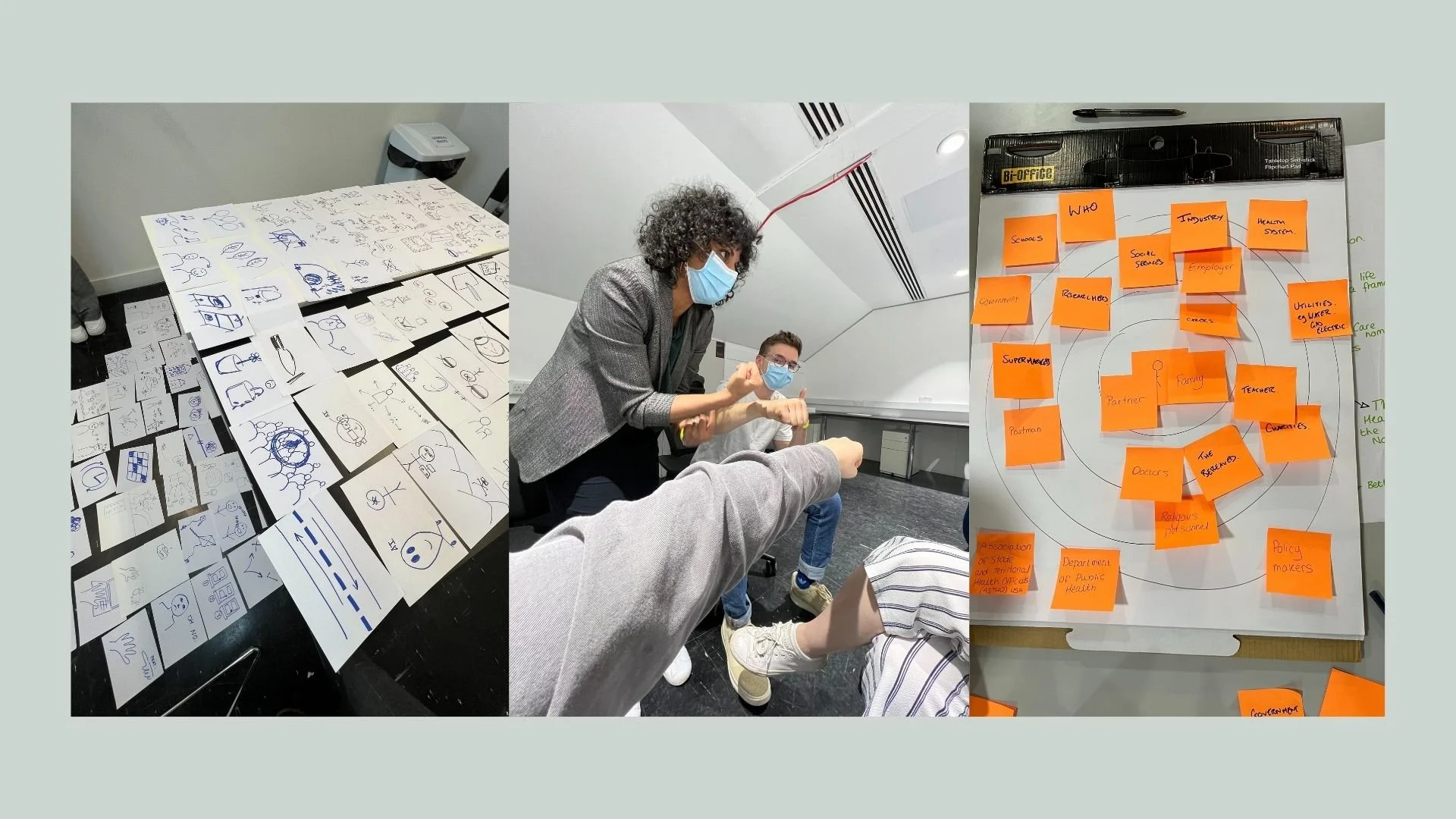
I hadn’t quite realised the difference in ‘brain-type’ until we had a quick fire ideation session on day three. We were asked to draw one idea per thirty seconds for almost an hour. The aim was to get ideas down on paper, regardless of whether they were abstract or badly drawn, it was an exercise in brain articulation, of communicating our thoughts succinctly and visually.
The idea of this didn’t phase me, it’s something I do daily when working on new concepts and brands. Following a brief explanation, we picked up a pen and began the task. I didn’t look up for a while, but when I did it was fascinating to look around the room at everyone sitting there. I didn’t know my colleagues that well by this point - but even if I had forgotten if they were a designer or clinician, it was obvious by their body language and rate of drawing.
Skip to the end of the exercise and I had drawn over eighty five ideas (best in the class, not that it’s a competition…!) and the clinicians had drawn maybe ten to thirty.
I had a GP in my group who had drawn about fifteen - all her ideas were super complex and really interesting, with a focus on practical solutions and proactive action. Later, we discussed the task at the pub - the conclusion we came to was that as a clinician you are routinely asked; ‘how are you going to do that?’, ‘what if that doesn’t work?’, ‘how much is that going to cost?’, ‘is it wrong or right’?
None of these thoughts crossed my mind. I was free to draw any idea, regardless of the consequences or outcome. My colleagues had this expectation of limits. They had a blocker, almost held back by their years of scientific schooling.
I am not saying that my design schooling was better, if anything, it’s the opposite. This simple exercise was a fascinating insight into a scientific mind, emphasising why I wanted to do this course. There’s a highly productive and balanced framework here, created for designers to learn from clinicians, and for clinicians to learn from designers. I think that this crossover is where innovation sits, helping to propel a sustainable and inclusive healthcare system into the future.
Our two week sprint explored design and healthcare through a variety of approaches.
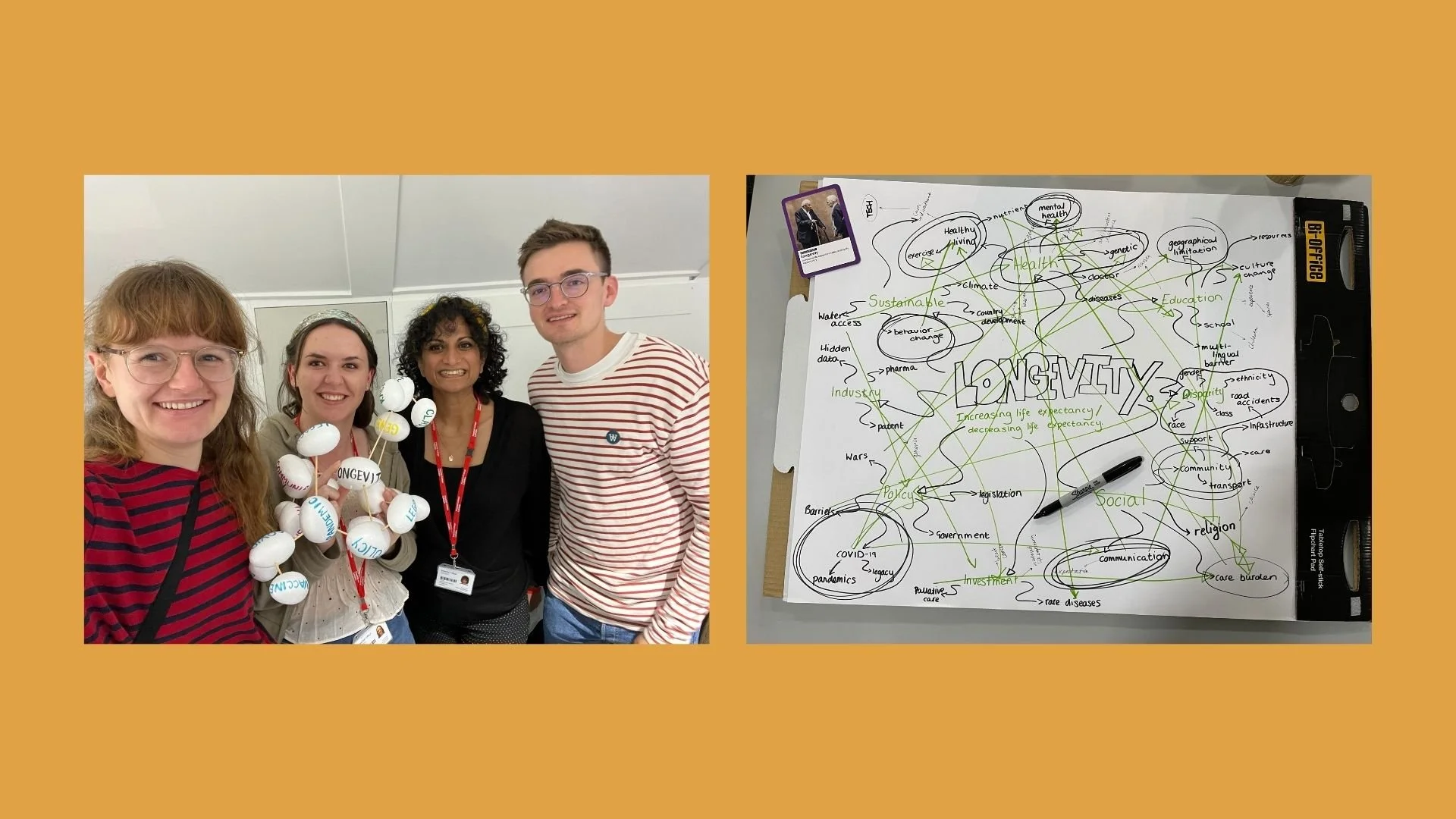
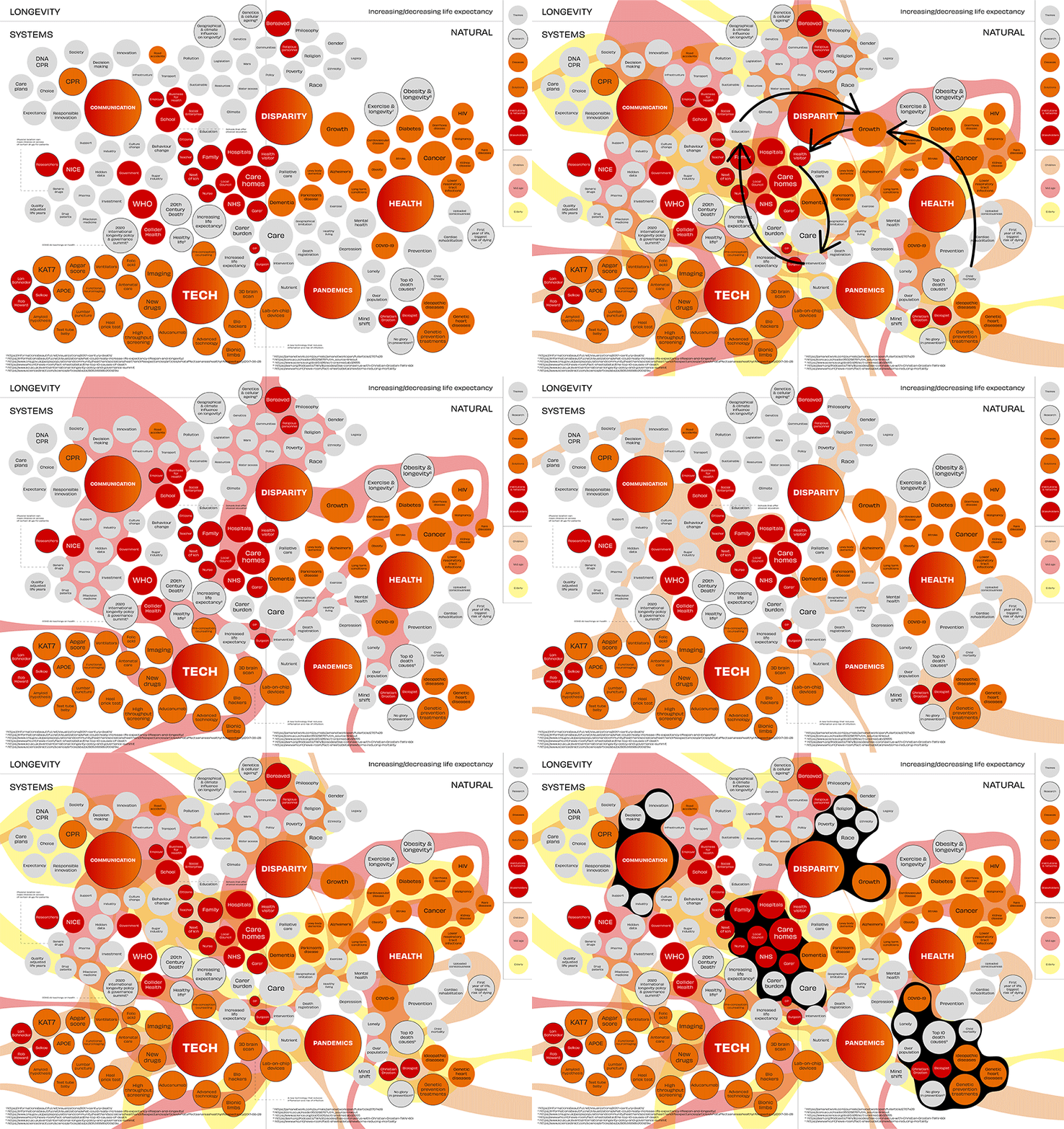
The quick fire ideation session sparked a series of thought provoking exercises with a nod to the power of collective decision making and team-based practice. Mapping out the problems entrenched in longevity helped to expose the issues we encounter in both industries, as well as at their intersection. Another exercise looked at the user first, creating emotional and stakeholder maps to help plot out the issues we experience, something I now use in the discovery stages of my day-to-day design work. Week two saw us unpack the effect that product design, systems, and interior design have on their users - we explored everything from cybernetics, to why cars have faces, plus the evolution of Apple products. It triggered a point of reflection for me as a designer invested in healthcare - what can I do to aid our progress?
As said in our Helena Traill Design mission statement, we are driving a future of creative design led by collaboration. This course is giving me that chance to collaborate with an innovative community specialising in healthcare. Bring on the second design sprint in March 2022!
Want to collaborate on a project led by healthcare? Get in touch!
Images featuring Dr Lia Ali, Jessica Winkworth and Manuel Schmid.
